Monday, October 1, 2018

~ In Pursuit of Wildness: Zion National Park ~

After retiring from the National Park Service following a 36-year career—one that took me to many of our nation’s crown jewels, including Yellowstone, Rocky Mountain, Mount Rainier, Joshua Tree, Pinnacles, Bighorn Canyon, and Sequoia and Kings Canyon National Parks—I set out in search of a new kind of adventure: one found on two wheels.

Traveling light, camping along the way, and taking the backroads whenever possible, I chased wildness across Arizona, New Mexico, Colorado, Utah, Montana, Idaho, Oregon, Washington, and California.

This is one of those journeys: In Pursuit of Wildness: Zion National Park.


Robert Griego and 2007 Yamaha Road Star.


"In Wildness is preservation of the world." Henry David Thoreau


"In Butch Cassidy and the Sundance Kid, the two bank- and train-robbing bandits sought these red canyons as their hideout from the law. I was mesmerized by Paul Newman and Robert Redford in this modern-day Western, but honestly, the scenery captivated me more. I knew that one day I would have to visit the wild canyons of Zion National Park..."

Walter Wiggles is a must.
A feat of engineering.


The views are incredible. 


Robert Griego hiking up Walter Wiggles.


Be sure to stop by the Visitor Center to plan your visit.


Denise Griego exploring the Virgin River Narrows.

Thursday, September 13, 2018

~ 150,000 Miles ~

"The Wind, the Open Road, and my Motorcycle" -  this is my mantra. - Robert Griego

150,000 miles!

A few days ago, a milestone was reached.  My 2007 Yamaha Road Star turned 150,000 miles on an awesome motorcycle ride in Malibu called, Ride to the Flags.

There were over 1,000 bikers on this ride.  It was honor to ride the miles for this worthy cause.

So today there will be few words, only admiration for my 2007 Yamaha Road Star which I bought new in 2007.  It has been a dependable mount.  It has given me such a joy.

This is a special moment!  So proud to be part of this special benefit ride for USN Holly Katke.


This is my favorite picture.  It was taken just after a heavy rain storm at the base of Mount Whitney. 
This black and white photo stopped time in between the rain drops

Wednesday, September 12, 2018

~ Ride to the Flags ~


“True patriotism isn't cheap. It's about taking on a fair share of the burden of keeping America going.” - Robert Reich


Ride to the Flags.


I’m a lone rider.  Some have called me a “lone wolf,” an “iron cowboy.”

I travel America on my motorcycle. I’m not a member of a motorcycle club so when I got an invitation from Jack Wise, President of the LA Fire Hogs M/C to join their club on the “Ride to the Flags,” I was honored.  I knew nothing about the ride, but the name told me that this was important and patriotic.

This ride is 28 miles along the Pacific Coast Highway (PCH) from Point Mugu Naval Air Station to Pepperdine University in Malibu.  I had never been there before so going to a new place has always agreed with me.

I was told that this was one of the biggest benefit motorcycle rides with well over 1,000 motorcycles riding for a great cause.  In this case, it was a benefit ride organized by the White Heart Foundation to raise money for a retired Navy sailor who was severely hurt when shot in the head by a sniper in Afghanistan.  Her recovery has been slow yet deliberate.

It is early in the morning in Thousand Oaks when I meet Rudy Santiago, Sgt-at-Arms with the LA Fire Hogs M/C.  He welcomes me and the other riders.  He seems like a veteran rider and will be our leader to Point Mugu Naval Air Station.  “Rudy, I plan to stop along the route to take a picture of my motorcycle as I’m approaching a milestone,” I tell him.  “Oh, what’s the milestone?”  I say that “I currently have 149,982 miles on my bike, and I want to get a picture at 150,000 miles on the odometer.”  He then hollers to the other riders, “When Bob pulls over, we stop.  He is approaching 150,000 miles and wants a picture.”  Now that made me feel special.  “Thanks, Rudy.”  I don’t know the roads we took, but it was a scenic ride in the mountains. The air-cooled in the morning fog as we approached the coast.

My odometer reads 149,999 miles as our group pulls up to the military base.  We are sectioned off in groups of 100 motorcycles.  We are ordered to dismount while the Navy police and his K-9 dog walks by each motorcycle searching for bombs and other illegal stuff.  We all passed with flying colors.  

As I approach the Navy parade grounds, I look down at my odometer.  It is at  E X A C T L Y  150,000 miles!  OK, I was meant to be here on this ride to honor, support and help an injured sailor.  There were well over 1,000 motorcycles and I try to stay close to my group, the LA Fire Hogs M/C.


.
Such a Road Star ~ 150,000 miles.  I bought it new in 2007.


Ryan, with the White Heart Foundation, explains what this event is all about.  He told us that this was the 11th such ride, all those before had been so successful.  He introduced several injured soldiers who passionately tell their story, their injuries, and their recovery.  Each thanks us for being here. They were positive and inspirational.  Each had been helped by the White Heart Foundation and they were here to help her.


The Key Note Speaker arrives in this 9/11 vehicle.


Then a 9/11 vehicle enters the parade grounds.  The keynote speaker had arrived.  This motorcycle ride is for her.  It took her a long time to get out of the car.  It took even longer for her to reach the podium.  Her young daughter helped her up the stairs onto the stage.  She spoke softly yet with passion, "This is the first time I have been to this event.”  She told us her story in detail about her tour in Afghanistan leading up to the day she was shot by a sniper.  She did not leave out details and took us directly to that battle scene.  The crowd was quiet.  She told us that she suffered paralysis on her right side and that she was legally blind.  Her humor softens the blows.  She was why we were here.  There were thousands here listening to her and so many badass bikers had tears in their eyes.  Yet, she ended her speech by thanking us for being here to support her.  “No, we are here to thank you for your service,” words I spoke to myself.  The roaring applause confirmed that.

Here before us is a true American hero – USN HMC Holly Katke.

The motorcycle leader gave us a quick safety talk.  “We’ve never had an accident on the previous 10 rides and we want to keep it that way.”  He asked us to ride two abreast, about 40 miles an hour along the 28 miles on the Pacific Coast Highway to the “Flags” at Pepperdine University in Malibu.  I had never been here so I listened intently.  “Ok, get on your bikes - let’s shut down the Pacific Coast Highway!”  The sound of bikes firing-up was intense.

The roar of over 1,000 motorcycles made the hair on the back of my head stand-up.  As we entered Highway 1, emotional tears flowed from my eyes. There were rows of American flags with young Boy Scouts saluting us.  I was honored.


Thanks to the military police, sheriff, local police, and the CHP for the escort.


At one point along the PCT, I could see a mile ahead of me.  There were motorcycles as far as the eye could see.  In my mirror, motorcycle headlights lined the PCT for what seemed like forever.  The tourists along the beach enthusiastically waved as we passed.  Little kids looked in amazement.  Soon, American flags began to wave as we approached Pepperdine University.  I loved it.

When we arrived at Pepperdine University, there were some 3,000 flags representing the victims who perished on September 11, 2001.  The scene was humbling, something that I did not expect.

As painful as it was that September day, our Nation is stronger.

This was the end of our ride to the flags.  I’m told that we raised over $52,000 today for her.

Thank you Holly Katke for your service!


Thank you Holly Katke and victims of 9/11 ~ Pepperdine University.


Over 1,000 bikers riding strong ~ about to enter Highway 1.


The fog began to lift.


We were sectioned off into groups of 200 or so.


Arrived.  Just look at all those flags!


Love that she carried her flag the entire 28 miles.


Love your flags brother.


Pepperdine University draped in fog ~ an awesome sight.


Monday, August 6, 2018

~ In Pursuit of Wildness: Chasing Curves on the Pacific Coast Highway ~

The article "In Pursuit of Wildness: Chasing Curves on the Pacific Coast Highway" by Robert Griego was originally published on the "RoadRUNNER Touring & Travel" magazine website on 7/30/2018.


Historic Bixby Bridge.

It has been over a year since I planned this motorcycle ride along the iconic Pacific Coast Highway (PCH) or California’s Highway One.
A few days ago, in fact at 9:45 am on July 18, 2018, State Route 1 at Mud Creek re-opened after a 14-month closure due to a massive landslide followed by an emergency repair project. The scenic coastal road was blocked for nearly a quarter-mile between Big Sur and the famous Bixby Bridge south of Monterey, California.
I wanted to be first in line to travel this coastal road but I decided to wait, knowing that there would be thousands of tourist wanting to do the same thing.
Tonight, I am camping at my favorite National Park Service area, Pinnacles National Park. I absolutely love Highway 198 past Coalinga, then north on Highway 25 that winds through valleys and opens up with vast grasslands where content cows and horses graze. In the morning, I’ll ride past Hollister, San Juan Bautista State Historic Park, and then onto Monterey and Carmel. It will be exciting to again travel south on Highway 1 towards Big Sur, San Simeon, Cambria, and Morro Bay. Summer is in full force in the central San Joaquin Valley where we are on track to break the record of consecutive days over 100 degrees, so I’m looking forward to the cool ocean breeze.
I pack, then re-pack, my motorcycle until things are perfect. I travel light, life is simpler that way — sleeping bag, Therm-a-Rest, ground cover, hammock, headlamp, solar light, Pocket Rocket stove, portable shovel, first aid kit, one cooking pan, Dinty Moore stew, sardines, several Gatorades, and my trusty transistor radio. I once listened to Vin Scully announce an entire Dodgers baseball game at my camp without another person around for miles.
As I leave Hollister, it is a warm 90 degrees but the temperature drops quickly to 60 degrees under a heavy marine layer at Castroville along Highway 1. As I approach Monterey the sun comes out, temperature rise as tourist leisurely walk along Fisherman’s Wharf and Cannery Row. I have always enjoyed this area, thinking about all the great stories by John Steinbeck – Of Mice and Men, The Grapes of Wrath, Cannery Row, and scores of others.
I plan to camp tonight at San Simeon State Park as I pass Big Sur and the massive Redwood trees on my motorcycle. The air is cold but I love the curves and vistas as the sound from my machine echoes off the steep canyon walls. There is still construction ongoing along the cliffs near Mud Creek. There is a new, awesome rock tunnel that I pass on my way to the famous Bixby Bridge. I stop with the other tourist and marvel at the massive bridge which is perhaps the most photographed bridge in the world. The Elephant Seals, near San Simeon, are in the thousands and love to be photographed as well as the rolling hills towards Hearst Castle!
The evening skies are dramatic and the sunsets are gorgeous from Cambria to Morro Rock. Once you take this motorcycle route, it will likely be one of your best rides – guaranteed.
The Pacific Coast Highway is one of my favorites trips and the year-long wait to ride between Big Sur and the Bixby Bridge was worthwhile.
I think you will agree after riding this portion of Highway One.
Text and photography: Robert Griego


Sunsets are magical.


Clouds, sea, and sand.


Sweeping views along Highway 1.


Sunset at Morro Bay.


Elephants Seals


Saturday, August 4, 2018

~In Pursuit of Wildness: Exploring the Backcountry of Sequoia National Park ~


The article "In Pursuit of Wildness:  Exploring the Backcountry of Sequoia National Park" by Robert Griego was originally published on the "RoadRUNNER Touring & Travel" magazine website on 12/13/2016.


Everyone knows Yellowstone is America’s first national park. Few, however, know that Sequoia is the nation’s second national park and California’s first. That’s where this story begins.
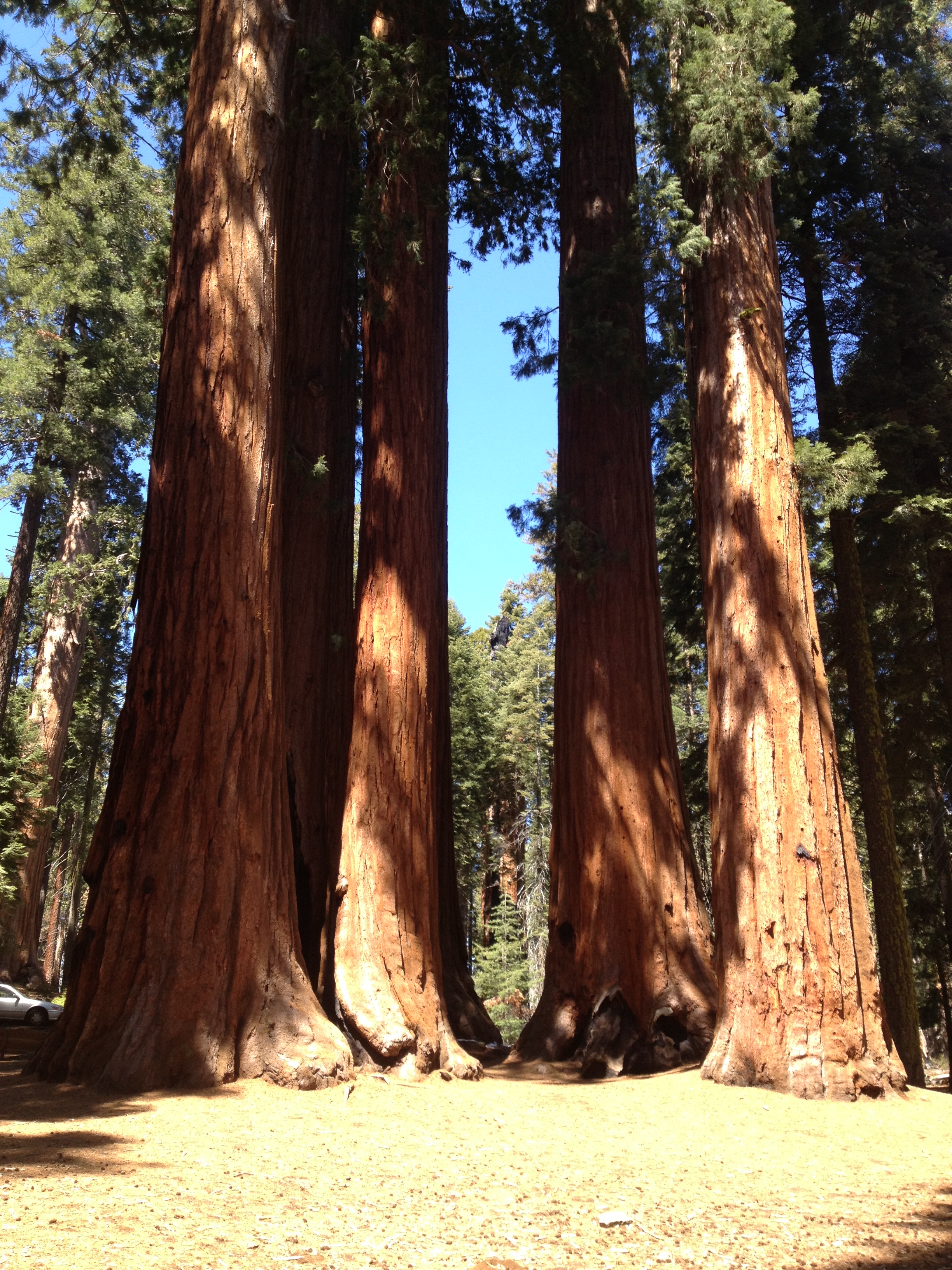
The giant sequoias were here some 2,000 years ago. Their root system is shallow and they drink about 500 gallons per day. If you come by after a fire, you will see hundreds of little sequoia trees sprouting from the ashes. Fire is important to them; they need heat to flourish and grow. In 1903, Captain Charles Young led the U.S. 10th Cavalry, also known as the Buffalo Soldiers, to protect the park in its early years.


My favorite thing to do in Sequoia is ride up to Mineral King and camp at Cold Springs Campground, rated as one of the best in the West. It is 25 miles from Three Rivers, with many curves, but so worthwhile. This high sub-alpine valley is at 7,800 feet. Check out campsite eight if you want a special spot for the night. Tonight I’m pitching a tent alone here, but my fire comforts me while the nearby stream quietly speaks to me. The stars talk too, but my fingers cannot quite touch them. In the warmth of my sleeping bag I think about John Muir and his words, “The mountains are calling and I must go.”
Riding horseback in the wilderness of Sequoia was a dream come true when I worked here. Those trips into the backcountry were a team building experience for management, yet for me it was a pure jolt of wildness. “Remember this moment around the campfire!” Superintendent Jack Davis did not mince words. “Our job is to protect and preserve what you have experienced today. This may be the most important time you spend with the National Park Service.”
On that trip, we rode horses, camped above timberline, fished, and forgot all about our worries back at park headquarters. We were there to reconnect with nature, to be better park stewards. Since 1984, nearly 90 percent of Sequoia and nearby Kings Canyon National Park has been managed as wilderness. So get out and hike. In just two to three miles down a backcountry trail you’ll find few people around. It is so rewarding.
On September 11, 2001, I was in my office at Ash Mountain in Sequoia National Park when I heard the news. The twin towers had just been attacked. The Federal Aviation Administration (FAA) immediately closed down all American airspace, and we felt that personally at Sequoia.
Our helicopter was being used to transport supplies and crew into the backcountry that day. They got permission from the FAA to do so, but confusion occurred. Our pilot thought the “OK to fly” was good for several trips. Wrong. Two F-18s were scrambled from Naval Air Station Lemoore just 70 miles away. They were flying “hot” and ordered our pilot to descend and return to the heliport immediately. The jets then slowly passed over park headquarters, as if to say to the superintendent, “We mean business.” The roar was deafening.
Today, Sequoia National Park stands strong, and so does our country. Here, the door to wildness is always open. Come and check it out for yourself.


Planning a Visit 
Sequoia National Park, located in the the Sierra Nevada range, is home to General Sherman, the largest tree on earth, and Mt. Whitney, the highest summit in the contiguous 48 states. There are multiple campsites, but GPS devices sometimes give inaccurate directions in this area, so keep a park map handy and pay attention to signs. Some roads are inaccessible in winter.
To DoDay hiking, Ranger-led activities, visitor centers and museums, cave tours, skiing, snowshoeing, picnicking, horseback riding, camping, rock climbing, and more.
Hours
Open 24/7/365, weather permitting. Highest visitation is in July and August. Campsites may be difficult to secure on summer weekends and holidays.
Cost
Twenty dollars per motorcycle ($25 starting January 1, 2017); $15 individual; $30 vehicle. All passes valid up to seven days for Sequoia & Kinds Canyon National Parks. Annual passes $50.
For more information or to purchase a pass, visit www.nps.gov/seki.
Text and photography: Robert Griego

Wednesday, August 1, 2018

~ In Pursuit of Wildness: Celebrating 100 Years of the National Park Service ~


The article "In Pursuit of Wildness:  Celebrating 100 Years of the National Park Service" by Robert Griego was originally published on the "RoadRUNNER Touring & Travel" magazine website on 07/14/2016.


The wind, the open road, and my motorcycle: this is my mantra.
Motorcycles have been a part of my of life since I was 16. My first bike was an 80cc Yamaha, and for a high school kid it was magic. I am 67 years old and still riding motorcycles. Today I ride a Yamaha Road Star. This was my gift to myself when I retired from the National Park Service after 35 ½ years.
The vision of preserving and protecting the national parks for future generations is a worldwide responsibility. I learned this after working two and a half years for the Department of Wildlife and National Parks in Botswana, Africa. My first job with the National Park Service, however, was as a temporary laborer, working on a garbage truck at Lodgepole Campground in Sequoia National Park. My job, according to old Earl, was simple. “You ride on the back of the garbage truck. When it stops, you pick up and empty the trash can into the truck and try not to fall off.”
So this 18-year-old began a career. Some 16 years later, I would be offered the Chief of Administration position at Sequoia and Kings Canyon National Parks. I would end my career here as Program Manager after working 18 years at those great parks, and 35 ½ years with the National Park Service. Today, I live in Three Rivers, CA, at the foothills of Sequoia National Park. These Sierra parks are huge and time is needed to really explore them. Ninety percent are in the backcountry, most in wilderness. But with a few days, you can touch the giant Sequoias, climb Moro Rock, camp at peaceful Cedar Grove or Mineral King, or take the Crystal Cave tour.
Recently, my wife and I rode my motorcycle through both parks in one easy day. We took the Dry Creek backroad to Grant Grove in Kings Canyon National Park, stopped by Giant Forest to take a short walk among the giant Sequoias, climbed Moro Rock for amazing panoramic views, and returned home to Three Rivers via foothills chaparral.
My passion is to ride my bike across America in pursuit of such wildness, in a manner that may have been done 100 years ago on horseback. I will camp lightly on the land, observe and explore nature, reconnect with families and ancestors, and share my adventures, which will take me along trails that might have been traveled by John Muir or Juan de Oñate. They were explorers at heart, and that wildness drove them deep into wilderness. One pursued gold and another pursued nature, yet both had similar passions.
I am grateful for the opportunity to have served our country, working in some of the crown jewels of America: Rocky Mountain, Mount Rainier, Yellowstone, and Sequoia and Kings Canyon National Parks. The park system is full of natural, historical, cultural, and recreational wonders. Some of the lesser known areas that I worked at are equally important: Bighorn Canyon National Recreation Area, and Joshua Tree and Pinnacles National Parks.
On August 25, 2016, the National Park Service will celebrate its 100th anniversary. A very special date in our history. We can all relate to our national parks—many in our own backyards. Perhaps the next 100 years will be the most important, teaching our children the value of preserving and protecting nature, keeping our national parks alive and well, and for me, all in the pursuit of wildness. In upcoming issues, I’ll be sharing my journey through these well- and lesser-known parks, and look forward to offering tips on how you can plan a trip of your own.

Text and Photography: Robert Griego